Over the past few years, I’ve been snatching Sunday afternoons here and there to undertake the meaty task of auditing the Glyn Uzzell Archive (as I’ve come to call it). The archive has material relating to the artist’s life and work from the 1960s through to the 2010s. Recording it has become a much more important part of my research than I initially realised, and not only because there is much more material than I first thought! Every document tells a fascinating story about an event, an exhibition, a relationship or a body of work. It opens a new door to my understanding of Uzzell and helps me map his career.
Looking at leaflets and catalogues form exhibitions has enabled me to compile Uzzell’s history of group and solo exhibitions. Though this piece of research is taking a long time, and the list is not yet comprehensive, it is a fascinating endeavour. References to a staggering 128 exhibitions have been found, indicating Uzzell’s immense productivity and far-reaching career.
Uzzell’s exhibitions are great in number and impressive from a geographical standpoint. From 1957-2014, he had at least 63 solo shows, which took place in the UK, France, Switzerland, America, South America, South Africa, Venezuela and Cyprus. He was included in at least 65 group exhibitions, many in capital cities across the world, including Paris, Milan, New York, Krakow, Tokyo, Toronto, Santiago and Barcelona. We can see that Uzzell worked with a huge array of organisations and artists; some fleetingly, and others for a long period of time with people who helped shape his career.
Understanding where and when Uzzell exhibited is a starting point for digging deeper into this vibrant and creative life. What follows is a whistle-stop tour through five decades of Uzzell’s exhibiting history.
1960s
Uzzell’s first solo exhibition took place at Galerie Buomberger, Zurich in 1957. That same year he took a job at the International School of Geneva, which could go some way to explaining why a 3-4 year gap passed before another exhibition materialised. However the turn of a new decade signalled the beginning of a flourishing career.
In the 1960s Uzzell’s success as a printmaker is reflected in numerous group and solo shows. In 1961 he won a prize at the “Salon des Jeunes” and was given an exhibition at the Musée de l’Athenée, Geneva. Solo shows followed in Paris, Genoa, San Diego, Sion, Caracas, Port Elizabeth, Nyon and Nicosia.
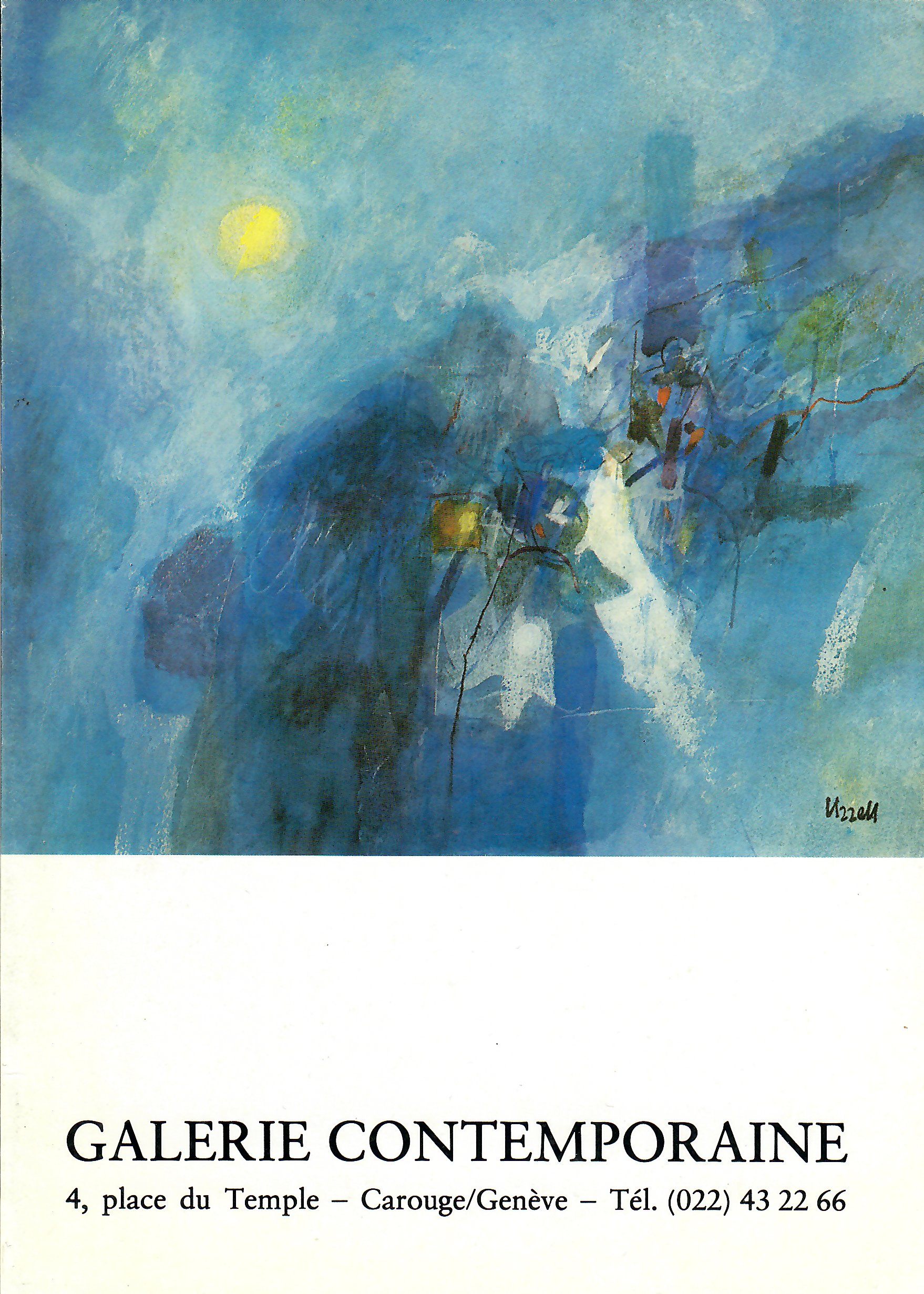
Back home in Geneva, in 1964, Uzzell opened the Galerie Contemporaine in Carouge with Robert Herensperger. The gallery aimed to promote the work of young artists at reasonable prices, including Uzzell himself, who held annual solo exhibitions there. The gallery ran successfully for thirty years.
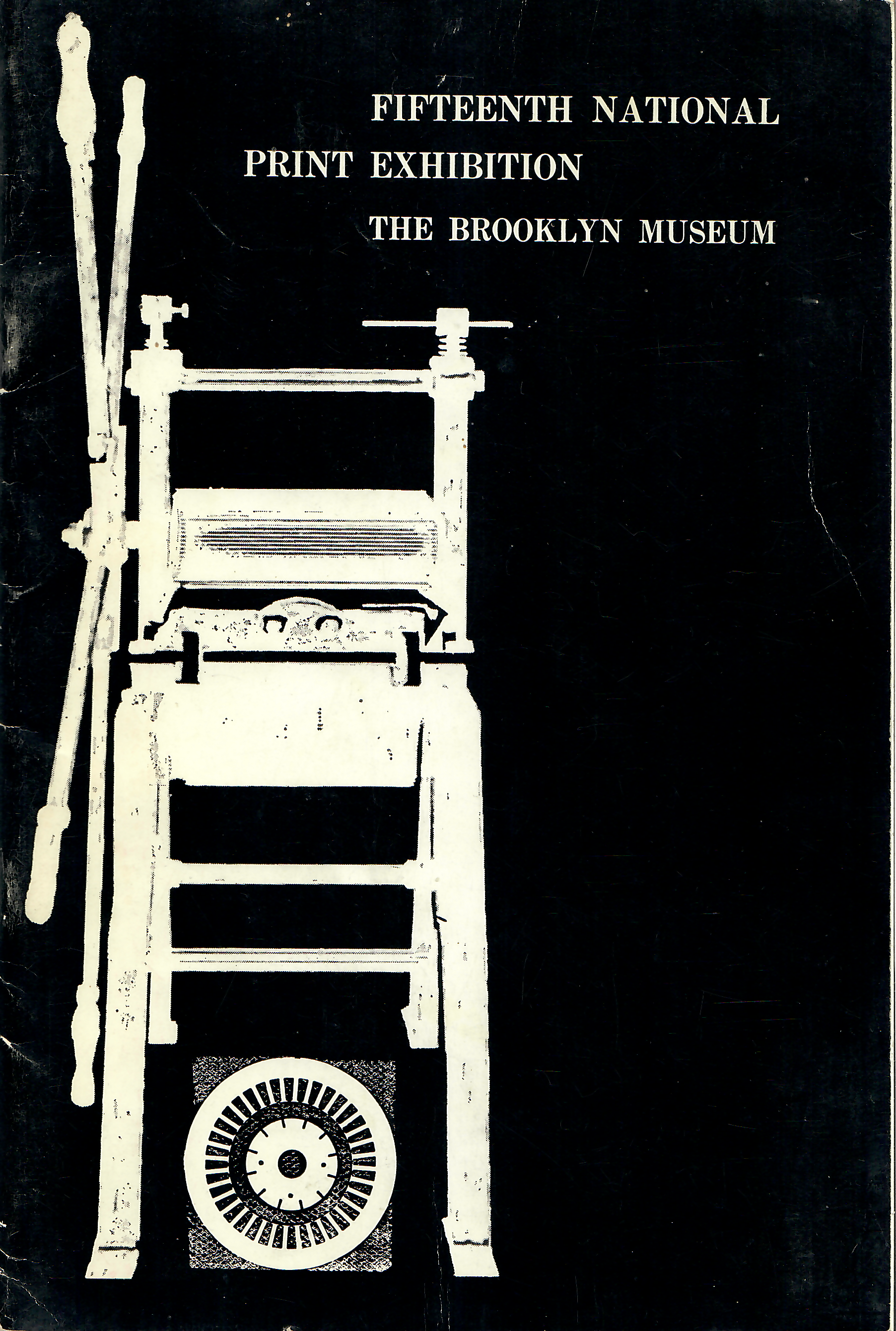
In 1965, Uzzell went to New York to study printmaking at the Art Students League. His presence in the US explains his solo show at the Orr’s Gallery (San Diego), and his inclusion in the 15th National Print Exhibition at the Brooklyn Museum (New York).
1970s
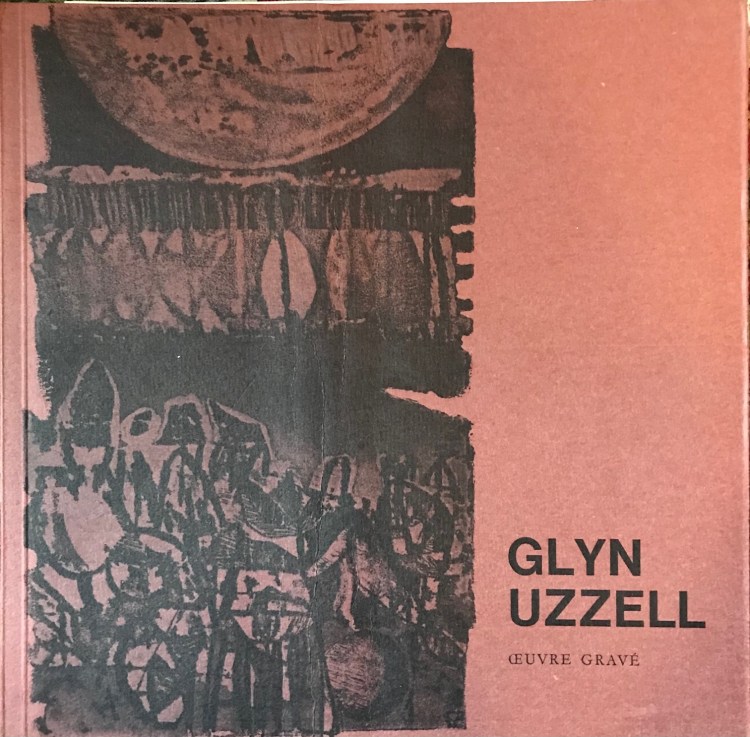
In the 1970s, Uzzell’s profile as a significant printmaker in Switzerland continued to grow. From 1972-74 he had eight solo shows in organisations across the country, and exhibitions at his own gallery in Carouge. Perhaps one of the most notable exhibitions is ‘Œuvre Gravé’ at Musée d’Art et d’Historie in 1972. This significant survey of Uzzell’s prints celebrates him as “one of the few artists established in Geneva to devote the major part of his artistic production to engraving.” This quote from the catalogue refers not only to the artworks themselves, but also Uzzell’s work in establishing the ‘Centre genevois de gravure contemporaine’ (Centre for Contemporary Engraving in Geneva).
After his flurry of solo exhibitions in the early 1970s, Uzzell’s involvement with international group exhibitions continued later into the decade. In 1977 he also had his first solo show at the Galerie Farel in Aigle, Switzerland, which continued to support him for the next 10 years.
When we consider that Uzzell’s time in Geneva is also defined by his work with the International School and the International Baccalaureate, his exhibiting history is almost incomprehensible. After such huge growth in his career during the 1970s, it is perhaps unsurprising that Uzzell and his partner Paul sought a more relaxed way of life. Their move to the Algarve in 1979 signalled a new direction in Uzzell’s career.
1980s
As one might predict, Uzzell’s list of exhibitions reveals a greater presence in Portugal in the 1980s. He secured regular representation by Centro Cultural, São Lourenço, which included solo exhibitions every other year, a one man show at Art Cologne in 1988, and inclusion in annual group showcases of represented artists. Uzzell was also invited to the Biennale de Vila Nova de Cerveria, and showed at the Calouste Gulbenkian Foundation, Lisbon, amongst other exhibitions.
Despite a fast growing profile in Portugal there was no halting his international output. Along with a continued presence in Switzerland, Uzzell had shows in Italy and the U.S.A. Rather touchingly, his globe-trotting career and increased presence at Art Fairs didn’t stop him from returning to Swindon in 1989, to share a joint exhibition with his mother Vera Uzzell.
1990s
Uzzell kicked off the 1990s with a solo exhibition at the Baukunst Galerie, Cologne and representation at the international contemporary art festival, Art Basel. The following year he had an exhibition in Lisbon supported by The British Council. An accompanying catalogue is peppered with quotes from Uzzell, charting his development from the first paintings he made as a young man to work recently produced – “I still see my work as basically figurative, an interpretation of the original subject, more ambiguous, intuitive rather than intellectual, and closely concerned with life around me.”
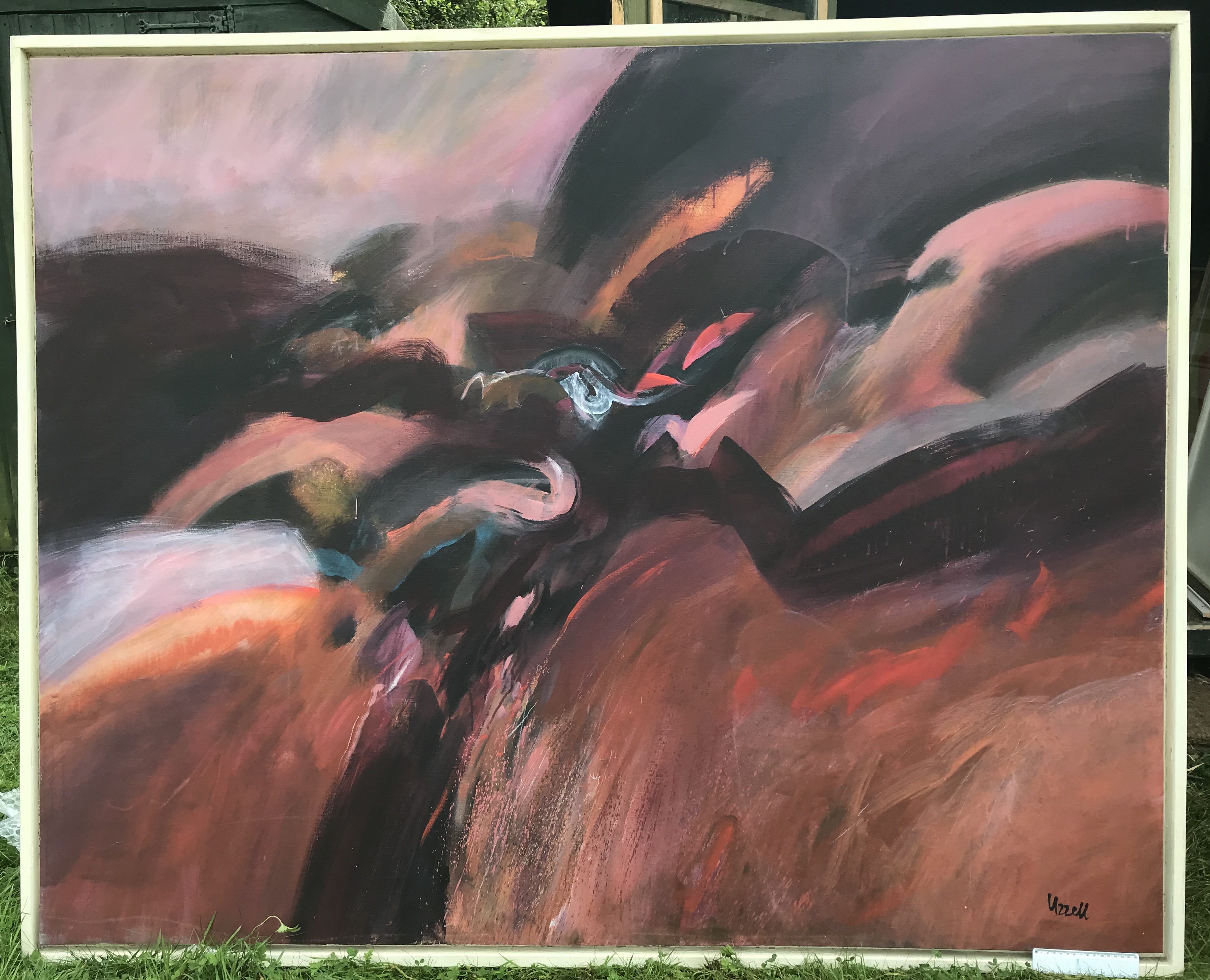
British institutional support Uzzell’s work didn’t end with The British Council. In 1995, he also had an important show of paintings at the (then named) Brewery Arts in Cirencester, which was funded by Arts Council England.
Meanwhile Uzzell’s relationship with Centro Cultural, São Lourenço continued to flourish. He was given 5 solo exhibitions and included in 5 group exhibitions associated with the organisation during the 1990s. It is clear that the gallery provided essential support for his professional career, along with great friendships with its owners, Marie and Volker Huber.
2000s
In 2002 the Centro Cultural, São Lourenço celebrated Uzzell’s 10th solo show with them. The exhibition leaflet boasts that by that time his work had been shown at the International Art Fairs in Basel, Cologne and Dusseldorf, and recently at the Galeria Municipal Gymnasio in Lisbon and Alexandre Mottier in Geneva.
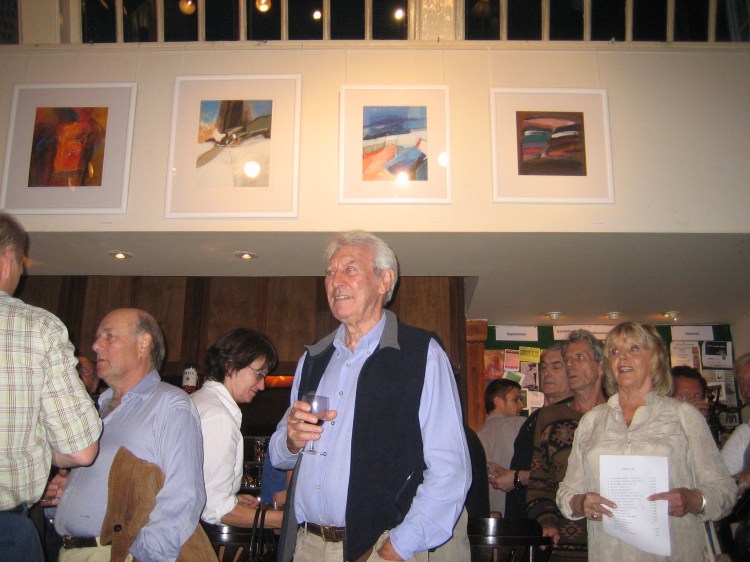
The archive is less comprehensive regarding the last few decades of Uzzell’s career, so there is a slight gap in my knowledge regarding exhibitions in his later years. However he seems to have shown extensively in Portugal and the United Kingdom. From friends’ recollections and photographs, we know that he was sponsored by Clive Dunn to become a member of the Chelsea Arts Club and exhibited there regularly up to his death in 2014. Unfortunately it has been difficult to pin down exact dates, and the organisation itself did not have any useful records.
In his last decade we also see Glyn associated with galleries closer to his town of birth. A significant example is ‘Articulated Forms’ in 2007 at the Rabley Drawing Centre in Marlborough, which saw Uzzell showing alongside distinguished British artists like Barbara Hepworth, John Hoyland and Graham Sutherland.
Next Steps
What is clear from this whistle-stop summary of Uzzell’s exhibitions is that he was valued and admired everywhere he went, and that his work not only found recognition in his immediate environment but also through international hubs of contemporary painting and printmaking.
This piece of research has given me a sound grounding for understanding the breadth of Uzzell’s career, the organisations that supported him, and those that he supported and developed too. As my research progresses, I will look closer at the exhibitions he was involved in. Understanding where and who he showed with is important to understanding his work, his creative networks and his place within the creative ecology of those locations.
Katie Ackrill, August 2026
 Glyn Uzzell: Making a Mark