Early years in Swindon
Glyn Uzzell was born in Swindon, in 1930, to Willy and Vera Uzzell. His family home was in Pinehurst which, as Glyn’s sister Wendy recalled, had a great sense of community that Glyn enjoyed returning to throughout his life.
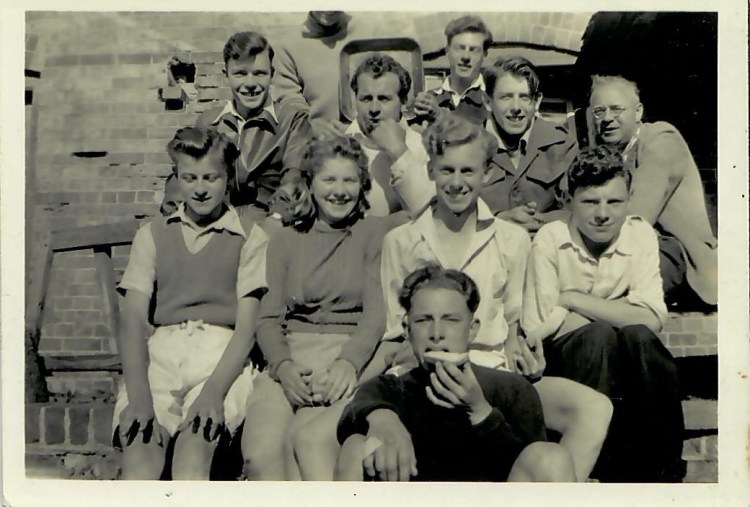
For many young men living in Swindon at the time, the obvious career choice was the Great Western Railway Works. In fact, some of Swindon’s most successful Swindon-born artists began their careers in the railway. Hubert Cook (1901-1966) and Ken White (1943-2025) both entered the railway works aged 15 and went on to have vibrant artistic careers, partly inspired by the G.W.R. But Glyn was disinterested in the industry life that dominated Swindon at the time and took a different path. Later on in life he recalled:
When I was seventeen I received a set of oil paints for my birthday and painted my first real painting. The subject was a thatched barn, some trees, a hedgerow and four or five chickens foraging beside a five-bar gate. A very English landscape caught in a light of a later summer afternoon. The place was a short bicycle ride from where I lived.“
(Catalogue – Paintings from Portugal, British Council Exhibition, 1991)
Uzzell’s interest in art may have started with his creative family. Though making a living working in a fish and chip shop, Glyn’s mother Vera also enjoyed time as a practicing artist. It would seem that her work was included in an exhibition on “Naive Art” at Swindon Arts Centre in 1987/88, and in 1989 she and Glyn had a joint show at Link Arts, also in Swindon.
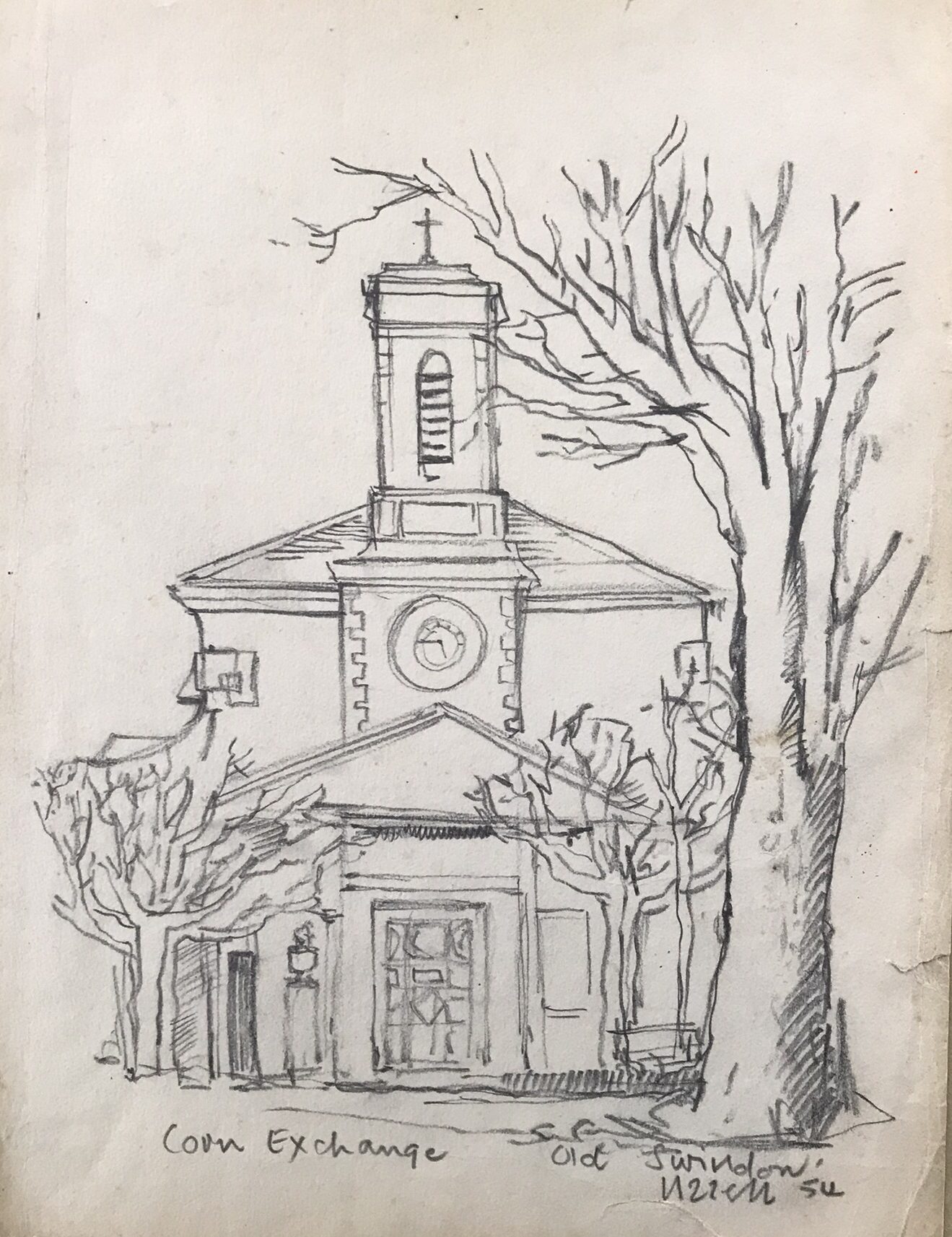
Wendy, also has a creative spirit which manifests both in her talent for dressmaking and beautiful silk paintings that demonstrate an eye for colour. Wendy recalls that her brother loved art from a young age, and one creative project even saw him painting a mural of a Dutch woman and geese on the bathroom wall, which she posed for. Five years his junior, Wendy describes Glyn as being generous with his time, and encouraging of her own interest in drawing through regular sketching trips around Swindon.
From Swindon to London
Glyn’s interest in art didn’t initially translate to a desire to be an artist. Instead he decided to be a teacher, and his vigilance as a student enabled him to find a route to teaching in London. Having passed his 11+ exams at Pinehurst School, he was admitted to Headlands Grammar School. In 1949 he went to the London Institute of Education and then took a job as a primary school teacher in Crouch End. Further art studies at Goldsmiths College between 1949-52 fuelled his aspirations as an artist, but teaching remained important throughout his career.
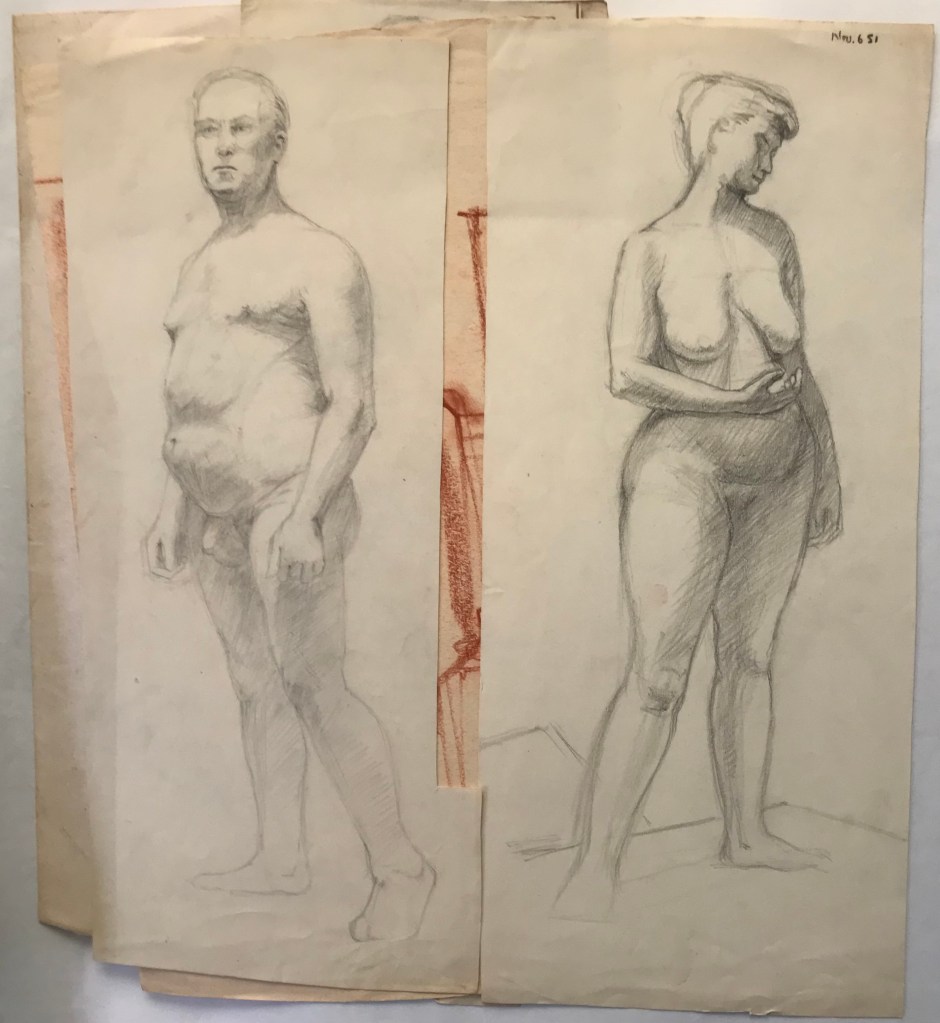
An exercise book from Glyn’s Art History course reveals the type of learning that he underwent at Goldsmiths. His extensive notes and sketches from the National Gallery collection show that he looked at art from the Stone Age, Bronze Age, Byzantine Era, the Renaissance and the Pre-Raphaelites. It is in these notes that we see the first mention of ‘The Baptism of Christ’ (c.1437-1445) by Piero della Francesca: a painting that would remain one of Glyn’s favourites throughout his life. Existing sketches also show Glyn’s proficiency for draughtsmanship as a student, with works from life drawing classes showing his competence at capturing the human figure.
Whilst Glyn was in London, he and Wendy’s relationship remained strong. Wendy recalls receiving phonecalls from her brother, beckoning her to the capital. Her frequent weekend visits included trips to the movies, the ballet and parties: a vibrant change of pace for a 14-15 year old girl. Family was important to Glyn, and his relationship with Wendy remained strong after he moved overseas.
Across the Channel
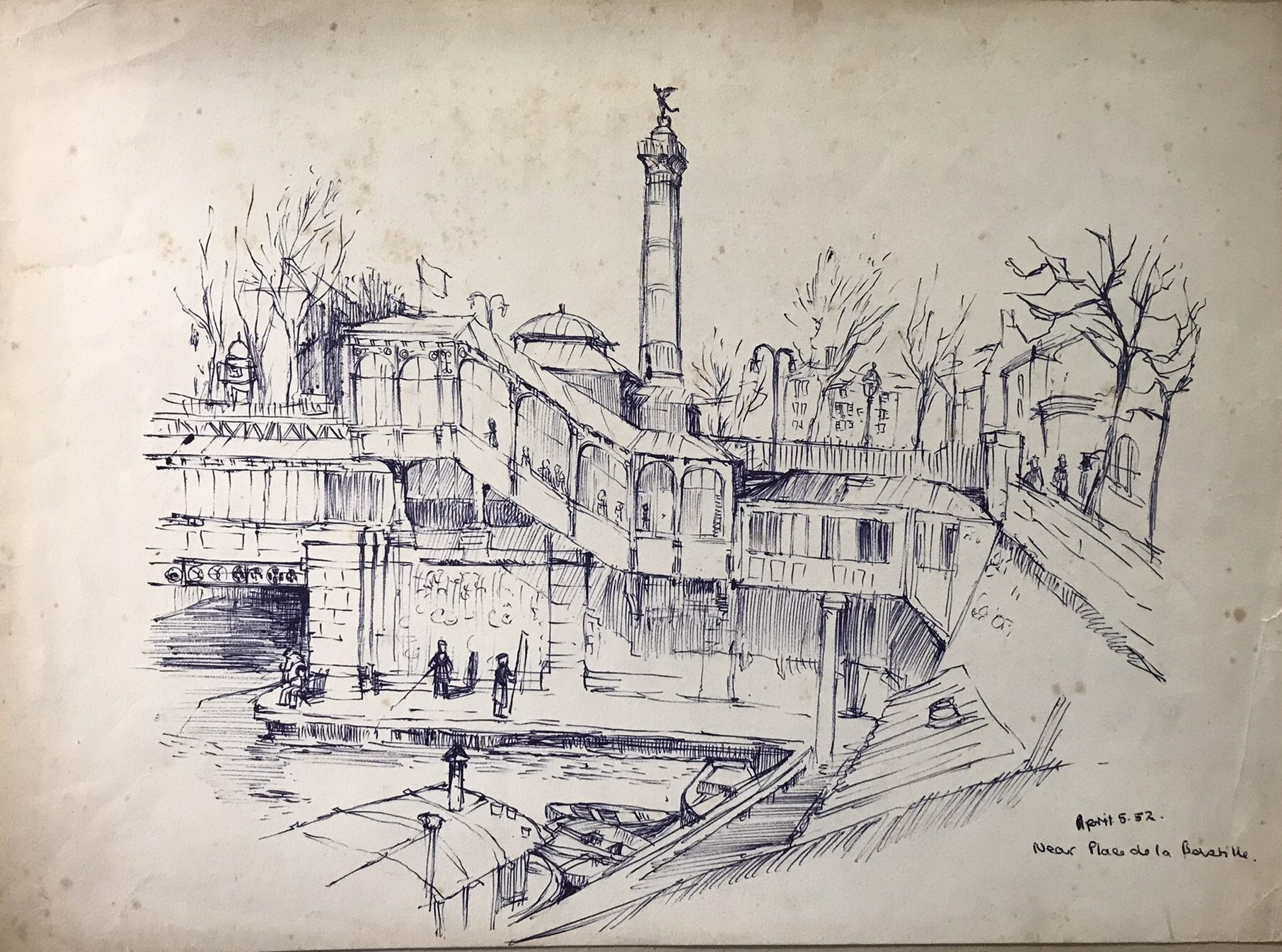
After he finished his studies Glyn went to Paris. There is still research to be done on this period of his life, as it is unclear when he lived there and for how long. Sketches from 1952 show scenes around the streets of Paris including the Arc de Triomphe, Place de la Bastille and the Eiffel Tower, whilst later drawings from 1954 show that he visited the French island of Bréhat.
Glyn’s motivations for moving to Paris are (as-of-yet) unknown, but it is unsurprising that he would be drawn to such an important cultural capital. As a centre of progressive art, Paris is likely to have appealed to a budding artist looking to establish a career. A friend of Glyn’s also told me that he hung out with a crowd of gay black American GIs, who may have been enjoying life in a more tolerant city than they experienced back home. As a young gay man it is possible that Glyn also felt comfortable in the liberal environment of Paris.
In 1957 Glyn responded to a job advert to work at the International School of Geneva. This career-defining move was the beginning of a new phase for Glyn, but that is a story for another time.
Katie Ackrill, August 2026
 Glyn Uzzell: Making a Mark